

Thank you for downloading!
Subscribe to our newsletter to receive email updates about our work, get connected and support Australians impacted by eczema. You can unsubscribe at any time.
Subscribe Now
Recently, concerns have been raised overseas about a possible link between dupilumab (brand name Dupixent®) and a rare type of skin lymphoma called cutaneous T-cell lymphoma (CTCL). This has led to lawsuits in the United States, and we know some in our community may feel worried.
At Eczema Support Australia, we want to provide clear, evidence-based information so Australians prescribed dupilumab feel reassured and informed.
The bottom line: No research has proven that dupilumab causes skin lymphoma. The current evidence strongly suggests that what has been seen is a case of two conditions being confused with each other- not a drug causing a cancer. Dupilumab remains a safe, life-changing treatment for severe eczema.
Unmasking pre-existing conditions
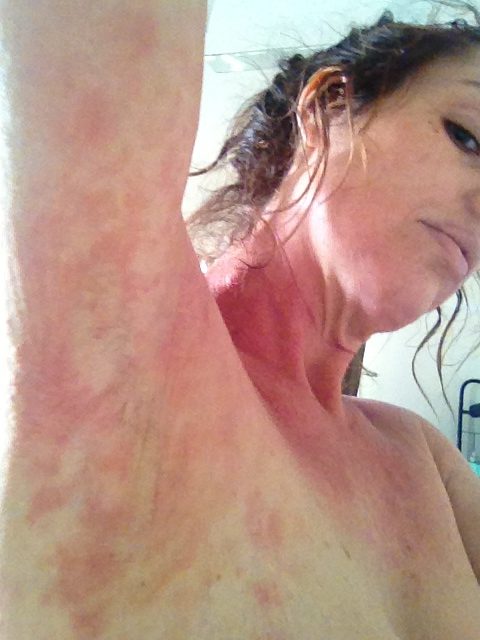
Experts believe dupilumab may sometimes “unmask” another underlying condition, making lymphoma more visible, rather than creating it. CTCL can look very similar to severe eczema, so it is thought many of these patients had lymphoma before starting treatment. This possibility needs to be particularly considered in adults over 40 years with new onset “eczema”.
No causal link has been found
Research has not shown that dupilumab causes cancer. While a small number of patients have been diagnosed with CTCL after starting dupilumab, this appears to be a coincidence of timing rather than cause and effect. The overall evidence is reassuring.
Diagnotic challenges
CTCL is rare and can be challenging to identify, even for experienced specialists. The good news is that there is growing awareness of the similarity between CTCL and severe eczema and the need to test if a patient is not improving on appropriate eczema treatment.
Very rare occurrence
Reports of CTCL in adults on dupilumab are extremely rare worldwide. There have been no reports in children. Most patients benefit greatly from dupilumab without any sign of serious complications. For most people with severe eczema, it remains one the most effective and well tolerated treatments available. CTCL may just be an expected coincidence considering the large number of patients using dupilumab worldwide.
Dupilumab remains available in Australia through the Pharmaceutical Benefits Scheme (PBS) for people with severe eczema. It has been used safely by many thousands of Australians.
Regulators, including the Therapeutic Goods Administration (TGA), are continuously monitoring the safety of all treatments including dupilumab. No Australian or international regulator has concluded that dupilumab causes CTCL.
The benefits outweigh the risks for most patients. Dupilumab has transformed the lives of many Australians with severe eczema.
Keep doing your regular check-ups.
Routine monitoring is good practice for anyone on a long-term medicine.
Let your doctor know if your skin looks different from usual.
Inform your doctor if your skin isn’t improving as expected or you notice new or unusual patches.
Don’t stop using dupilumab without talking to your doctor first.
Uncontrolled severe eczema has real impacts on your health and well-being.
Dupilumab is a breakthrough medicine for severe eczema, and the overwhelming evidence shows it is safe and effective for the vast majority of patients. While rare cases of CTCL have been reported in adults, these are unusual and complex situations that do not prove dupilumab causes cancer.
The best way forward is regular monitoring, open communication with your healthcare team, and ongoing trust in evidence-based care. Over time, and with more use, any correlation with CTCL and associated risk will become more or less apparent.
Dupilumab has transformed the lives of many Australians with severe eczema. The evidence does not support stopping or avoiding this treatment out of fear of developing lymphoma.
If you are worried, please talk with your dermatologist or immunologist.
** Information in this article has been reviewed and approved by The Australasian College of Dermatologists
Subscribe to our newsletter to receive email updates about our work, get connected and support Australians impacted by eczema. You can unsubscribe at any time.
Subscribe Now